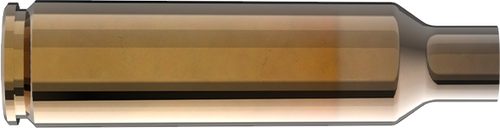
The Berger 260 Remington unprimed brass cases deliver consistent wall thickness and precise dimensions for precision reloaders demanding match-grade accuracy. Each case undergoes rigorous quality control to ensure uniform capacity and concentricity across the entire lot.
What Makes This Different
Berger brass cases feature tighter manufacturing tolerances than standard commercial offerings, with wall thickness variations held to ±0.0005 inches. The annealing process creates optimal neck tension for consistent bullet seating, while the flash hole deburring eliminates ignition inconsistencies that plague mass-produced cases. Case capacity remains uniform within 0.2 grains across the entire production run.Key Features
- Precision-drawn 260 Remington cases with match-grade tolerances
- Uniform wall thickness for consistent bullet release
- Properly annealed necks for optimal tension and case life
- Deburred flash holes for consistent ignition timing
- Weight-sorted cases with minimal capacity variation
- Large rifle primer pockets sized to SAAMI specifications
- 100 cases per box for efficient lot tracking
Technical Specs
- Caliber: 260 Remington
- Case type: Unprimed rifle brass
- Primer pocket: Large rifle
- Quantity: 100 cases per box
- Case length: 2.035 inches (trimmed)
- Wall thickness tolerance: ±0.0005 inches
- Material: High-quality cartridge brass
- Annealing: Factory stress-relieved necks