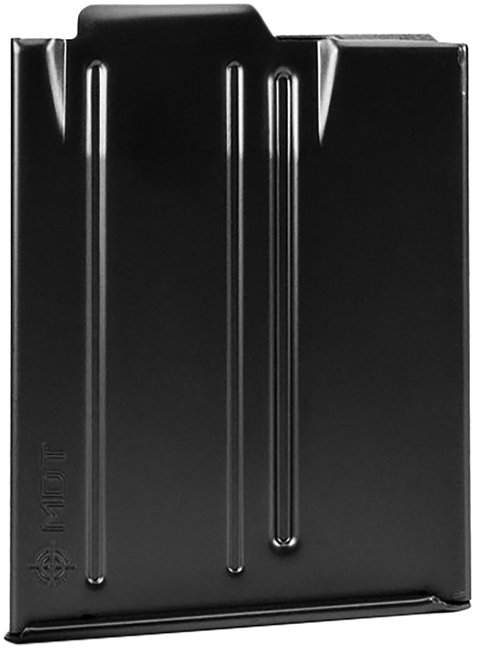
The MDT AICS Magazine 3rd Generation delivers precision feeding for 308 Winchester and 6.5 Creedmoor chambered rifles in short action configurations. This flush-fit magazine integrates seamlessly with multiple chassis systems while maintaining the reliable feeding geometry that competitive shooters demand.
What Makes This Different
The third-generation design incorporates improved feed lip geometry and enhanced polymer construction compared to earlier AICS patterns. The flush-fit profile sits cleanly within the chassis without protruding below the stock line, maintaining proper balance and handling characteristics. Internal dimensions accommodate both 308 Winchester and 6.5 Creedmoor cartridges with consistent feeding angles across the entire capacity range.Key Features
- Flush-fit design maintains clean stock profile and proper rifle balance
- Compatible with MDT, XLR, KRG, GRS, CDI, and Pacific Tool & Gauge chassis systems
- Reinforced polymer construction resists impact damage and temperature extremes
- Optimized feed lip geometry ensures reliable cartridge presentation
- Short action length accommodates 308 Winchester and 6.5 Creedmoor cartridges
- Black polymer finish resists corrosion and maintains low visibility
- Standard AICS footprint ensures drop-in compatibility
Technical Specs
- Caliber compatibility: 308 Winchester, 6.5 Creedmoor
- Action length: Short action
- Construction: High-impact polymer
- Finish: Matte black
- Profile: Flush-fit design
- Compatibility: MDT/XLR/KRG/GRS/CDI/Pacific Tool & Gauge chassis
- Pattern: AICS standard footprint
- Model: 105089BLK