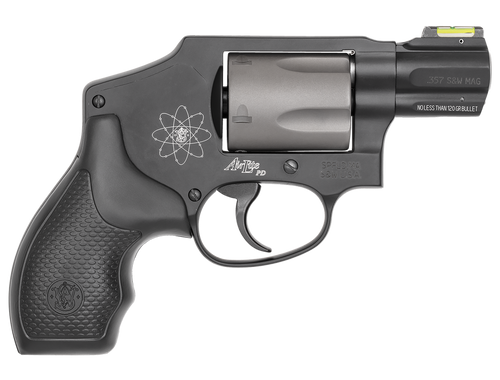
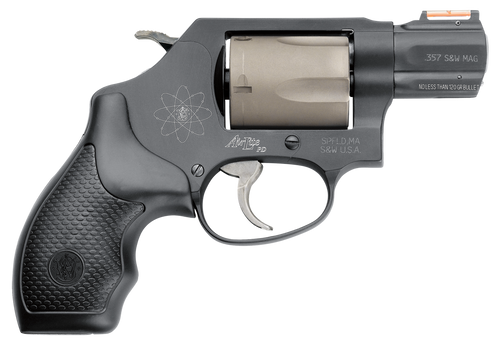
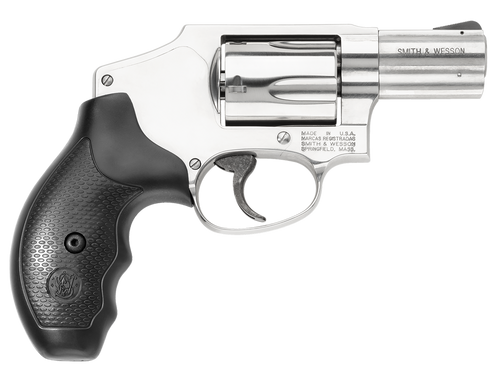
The Smith & Wesson Model 340 PD delivers maximum stopping power in an ultra-lightweight package designed for concealed carry. This scandium alloy J-frame revolver weighs just 12 ounces while handling full-power .357 Magnum loads, making it one of the lightest magnum revolvers available.
What Makes This Different
The Model 340 PD combines three advanced materials rarely found together in revolvers. The scandium alloy frame reduces weight by 40% compared to steel alternatives while maintaining structural integrity. The titanium cylinder provides corrosion resistance and further weight reduction. Most J-frame revolvers use traditional steel construction, adding 6-8 ounces that matters during extended carry.Key Features
- Scandium alloy frame weighs 40% less than steel while maintaining strength
- Titanium cylinder resists corrosion and reduces rotating mass
- 1.88-inch stainless steel barrel with black finish
- 5-shot cylinder capacity for .357 Magnum and .38 Special
- Black polymer grip provides secure hold and recoil absorption
- No internal lock system for simplified operation
- Compatible with most J-frame holsters and speedloaders
Technical Specs
- Caliber: .357 Magnum/.38 Special +P
- Capacity: 5 rounds
- Barrel Length: 1.88 inches
- Overall Length: 6.31 inches
- Weight: 12 ounces (empty)
- Frame: Black scandium alloy J-frame
- Cylinder: Titanium with black finish
- Barrel: Stainless steel with black finish
- Grip: Black polymer
- Sights: Integral front, fixed rear
- Action: Double-action/single-action
- Made in USA